

You wipe the window sill in the morning, and by evening it’s covered in a fine layer of dust again. If you live in Delhi-NCR, you know the routine. From summer dust storms to the heavy smog of winter, the city’s air finds its way into our homes, and very often it enters through the windows.
You can’t control the air outside. You can control how much of it gets inside. In this guide, we explain how windows let dust in, what to look for in a dust-resistant window, and the simple habits that make a real difference. If you want to reduce dust entering your home through windows, this is the place to start.

Why Delhi Homes Face a Dust and Pollution Problem
Delhi-NCR deals with air-quality challenges for much of the year:
- Summer: Hot, dry winds and dust storms carry fine sand and soil.
- Post-monsoon and winter: Smog builds up because of vehicle emissions, seasonal crop burning in neighbouring regions, and cold, still air that traps pollutants near the ground.
- All year: Construction activity and busy roads keep dust particles in the air.
Particles such as PM10 and PM2.5 are small enough to slip through very tiny gaps. They settle on furniture and floors. Fine particles can also be breathed deeply into the lungs, which is why many families worry about children, older adults, and people with asthma or allergies.
Air purifiers help, but they work harder than they should if your windows keep letting polluted air in.
How Dust Actually Enters Through Windows
Most people think dust comes in only when a window is open. In reality, closed windows can leak too. The common causes are:
- Poor sealing: Worn or missing gaskets leave hairline gaps around the sash.
- Weak frames: Old wooden or low-grade frames warp and shrink with heat and humidity.
- Ill-fitting sliding tracks: Basic sliding windows often have tracks with gaps that dust slips through.
- Bad installation: Even a premium window leaks if the gap between the frame and the wall isn’t sealed properly.
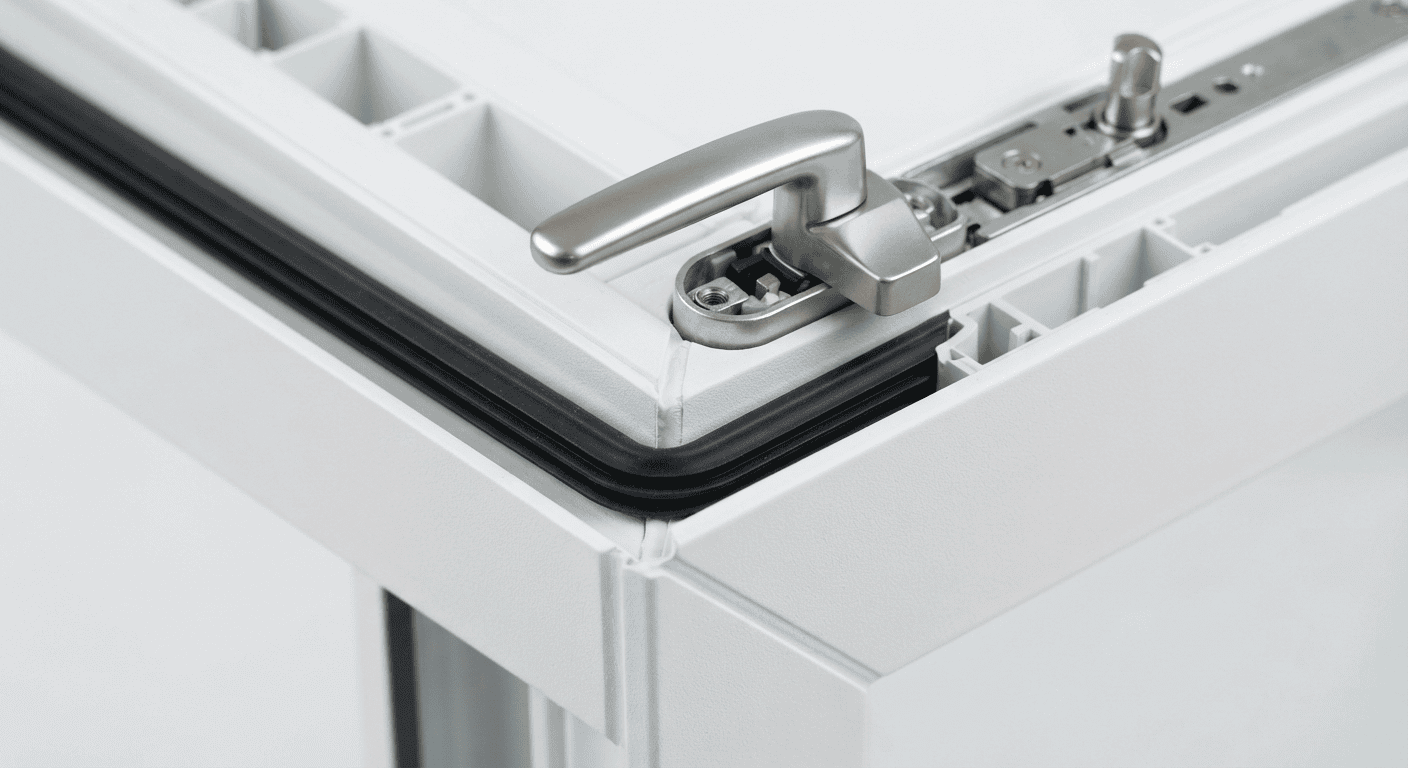
- Ageing hardware: Loose handles and locks stop the window from pressing tightly against its seal.
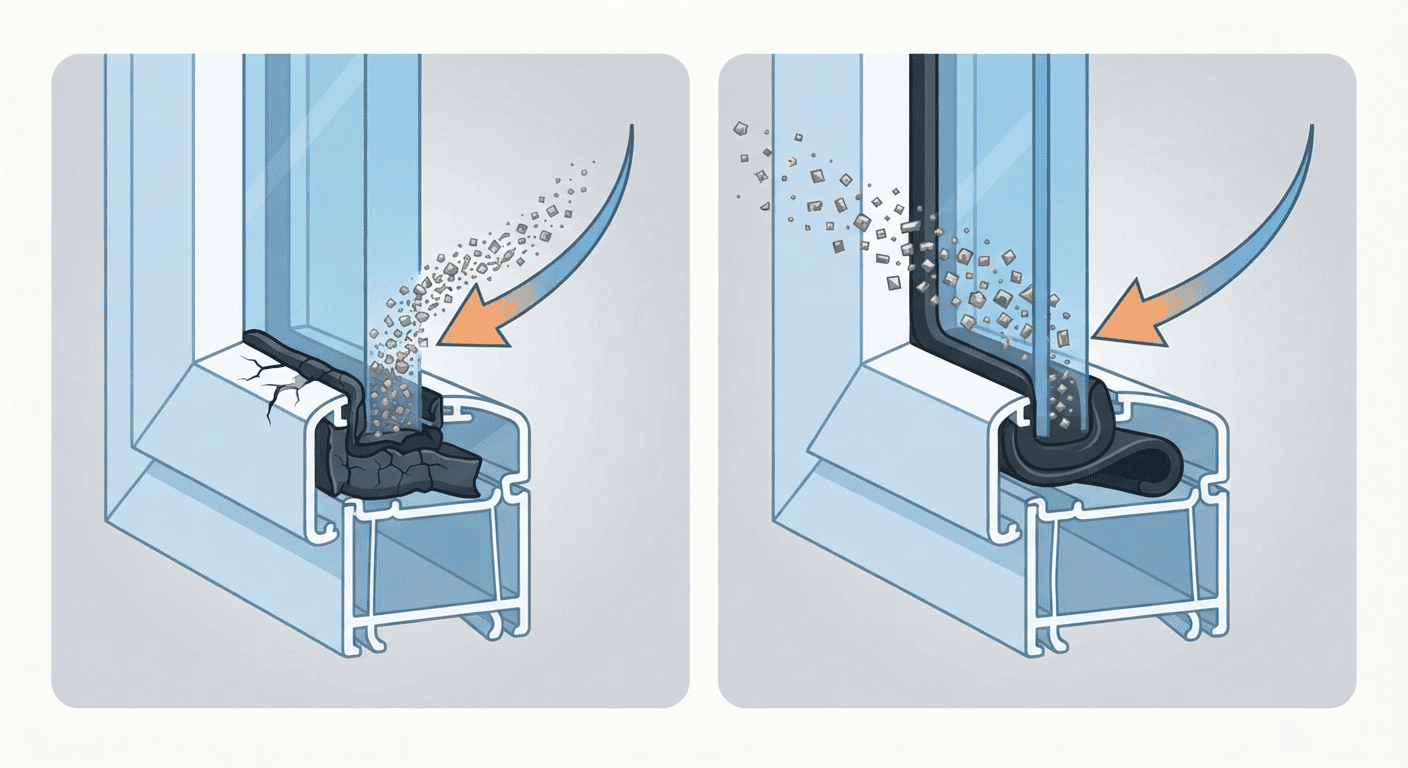
What to Look for in Windows That Keep Dust Out
1. Multi-Point Locking
A window with multi-point locking pulls the sash firmly against the frame at several points. This compresses the seals evenly, so there are fewer gaps for dust to find. It also improves security.
2. Quality Sealing Gaskets
Good gaskets run continuously around the sash. Look for flexible, durable gaskets that keep their shape in Delhi’s extreme heat and don’t harden or crack over time.
3. Rigid, Stable Frames
uPVC frames and well-engineered aluminium frames resist warping, swelling, and rotting. Frames that keep their shape stay sealed for years.
4. Tilt & Turn and Casement Designs
Because these windows close against the frame rather than sliding past it, they usually seal more tightly than basic sliding designs. Tilt & turn windows also allow controlled ventilation and are easier to clean from inside.
5. Fixed Windows Where Ventilation Isn’t Needed
A fixed window has no moving parts, so it has no tracks or gaps. It is a good choice for large glass areas where you want light and views but not airflow.
6. Well-Designed Sliding Systems
Sliding windows are popular in Indian homes because they save space. Choose systems with brush or pile seals along the tracks and a snug closing design. Keeping the tracks clean matters here.
7. Double Glazing
Double-glazed units are mainly known for thermal and sound insulation. They also use a strong, well-sealed glass assembly, so you get a calmer, cleaner, and more comfortable room in one upgrade.
uPVC vs Aluminium: Which Is Better for Delhi’s Dust?
Both materials can work well when they are properly engineered and installed.
- uPVC windows are low-maintenance, offer good thermal insulation, and have fewer joints, which helps with sealing. They are a popular choice for bedrooms and living areas.
- Aluminium windows are strong and slim, which suits large openings and modern designs. With quality gaskets and precise fabrication, they perform well for dust and weather protection.
The best choice depends on your home’s design, budget, and window sizes. A site visit helps you decide, because the right fit matters as much as the material.
Installation Matters as Much as the Window
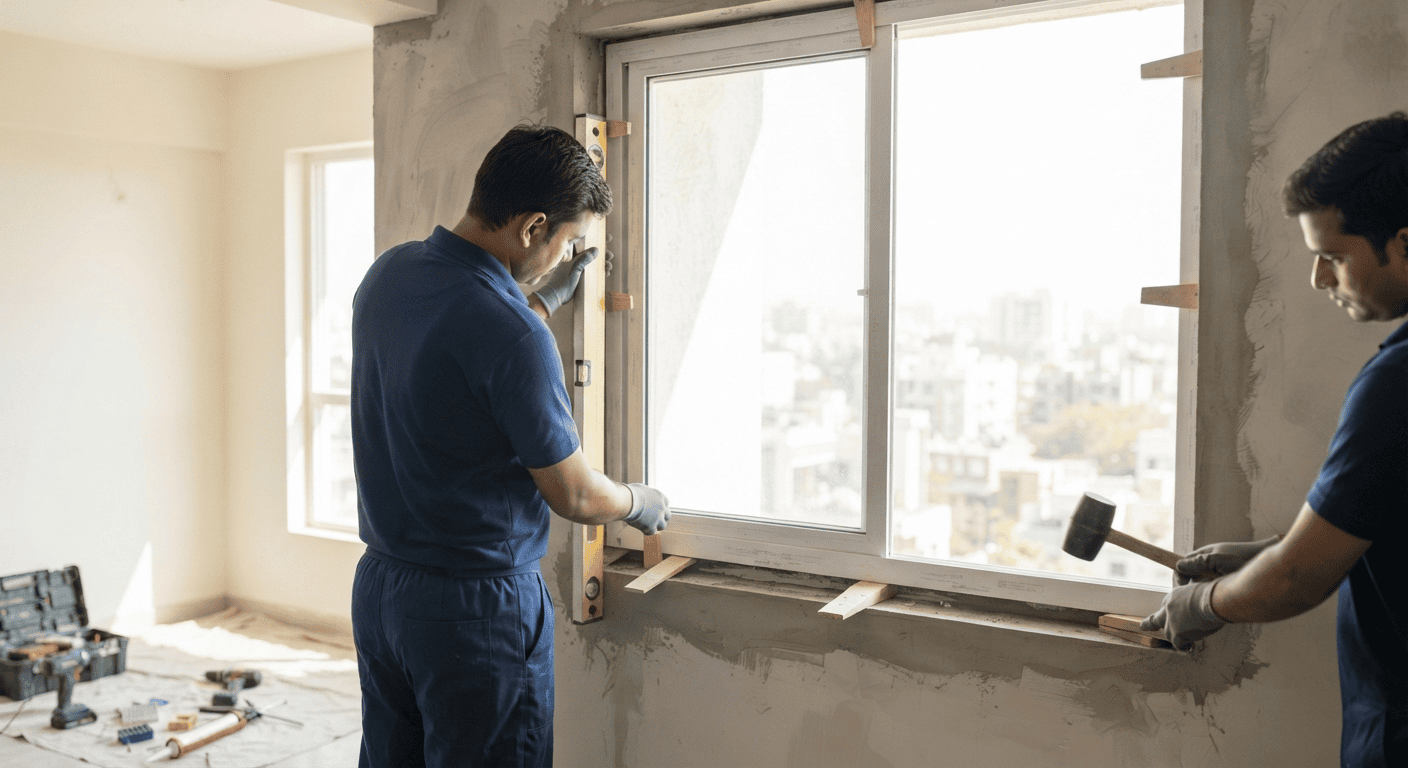
A top-quality window installed badly will still leak. Professional installation should include:
- Accurate site measurement and made-to-order fabrication
- Proper alignment so the sash closes evenly
- Sealing of the gap between the frame and the wall
- A final check of the locks, hinges and gaskets
This is why made-to-measure windows from an experienced manufacturer usually perform better than ready-made ones. At Alcove Infratech, we design, manufacture, install and service our systems ourselves from our Noida facility, so quality is controlled from start to finish.
Simple Habits to Reduce Dust at Home
Windows do most of the work, but a few habits help too:
- Keep windows closed on high-pollution days, especially during smog and dust storms.
- Ventilate smartly, for example early in the morning or after rain, when the air is usually cleaner.
- Clean window tracks and gaskets every week or two with a soft brush and a damp cloth.
- Wipe sills and frames with a damp microfibre cloth rather than dry dusting, which just lifts dust back into the air.
- Use an air purifier in bedrooms. It works best in a room that is well sealed.
- Check seals regularly. If you feel a draught or see dust lines near the frame, it’s time for a repair or replacement.
When Should You Replace Your Windows?
Consider replacing your windows if:
- You can see light or feel air around a closed window
- Dust collects on the inside sill within hours of cleaning
- Frames are warped, cracked or damaged
- Handles, locks or hinges are loose
- Your rooms are noisy and hard to keep cool or warm
Replacing old windows is one of the more practical home upgrades in a city like Delhi. It improves cleanliness, comfort, security and sound insulation together.

Final Thoughts
You can’t clear Delhi’s air, but you can make sure your home is a cleaner, calmer place to live. The right windows, properly installed and well maintained, can noticeably cut the dust entering your rooms and help you breathe easier at home.
Ready to upgrade? Alcove Infratech offers premium uPVC and aluminium windows and doors, made to measure and installed by experienced teams across Delhi-NCR and beyond.
📍 Factory / Showroom: A-144, Sector 80, Noida-201305
📞 Call: +91 9958-2213-27 | +91 9911-1507-43
✉️ Email: Sanjay@alcoveinfra.in
💬 WhatsApp for a free consultation: +91 9958-2213-27
🕙 Hours: Mon–Sat, 10:00 am to 7:00 pm
Follow Alcove Infratech:
Instagram | Facebook | LinkedIn
Frequently Asked Questions
1. Can windows really reduce dust entering my home?
Yes. Well-sealed windows with multi-point locking, quality gaskets, and proper installation can greatly reduce the amount of dust that enters, compared with old, loose or poorly fitted windows.
2. Which window type is best for blocking dust?
Fixed windows seal best because they don’t open. Among openable types, tilt & turn and casement windows usually close more tightly than basic sliding windows.
3. Are uPVC windows good for Delhi’s pollution?
uPVC windows have fewer joints and hold their shape well, which helps them seal properly. They also offer good insulation and need little maintenance.
4. Do I still need an air purifier if I install new windows?
Many families use both. Better windows keep polluted air out, so the purifier works more efficiently inside.
5. How often should I clean my window tracks and seals?
Every one to two weeks during dusty seasons, and after any dust storm.
6. Can old windows be upgraded instead of fully replaced?
Sometimes, for example, by replacing gaskets or hardware. If the frames are warped or damaged, replacement is usually the better long-term option. A site visit can confirm this.