
Windows are more than openings that bring daylight into a room. The glass you choose can influence indoor temperature, natural light, outside noise, privacy, safety, and the overall performance of your window system.
For modern homes in India, this decision becomes even more important because windows may face intense sunlight, heat, dust, monsoon conditions, traffic noise, and changing weather.
Choosing the Right Window Glass for Your Home therefore requires more than selecting clear or tinted glass based on appearance. You need to consider the room, direction of the window, size of the opening, climate, ventilation requirements, privacy, safety, and the performance of the complete window system.
At Alcove Infra, glazing is an important part of a complete fenestration solution. The company provides made-to-order aluminium and uPVC windows and doors designed for residential and commercial applications, including sliding systems, casement windows, tilt & turn systems and larger opening solutions.
Why Does Window Glass Matter?
Glass covers a large part of many modern windows. Because of this, its specification can have a substantial effect on how a room performs.
The right glazing can help manage:
- Solar heat entering the room
- Heat transfer through the window
- Daylight and glare
- Outside noise
- Safety and impact resistance
- Privacy
- Visual appearance
- Indoor comfort
Insulating glazing uses two or more panes separated by a sealed space. According to the U.S. Department of Energy, this type of glazing can reduce heat transfer and lower the window’s U-factor, while low-emissivity coatings can further influence heat transfer and solar gain.
This means the glass specification should be considered together with the frame, seals, hardware, and installation rather than treated as a separate decorative choice.
Choosing the Right Window Glass for Your Home Starts With Your Room
Every room has different requirements.
A bedroom facing a busy road may need greater attention to acoustic performance. A west-facing living room may need stronger solar control. A bathroom may require privacy, while a large balcony opening may require a suitable safety-glazing specification.
Before choosing a glass type, ask five simple questions:
- How much direct sunlight reaches the window?
- Is heat gain a major concern?
- Is outside noise disturbing the room?
- Is safety glazing required for the location?
- Do you need clear views, privacy, or both?
Answering these questions makes it easier to narrow down the best window glass for home based on actual requirements rather than appearance alone.
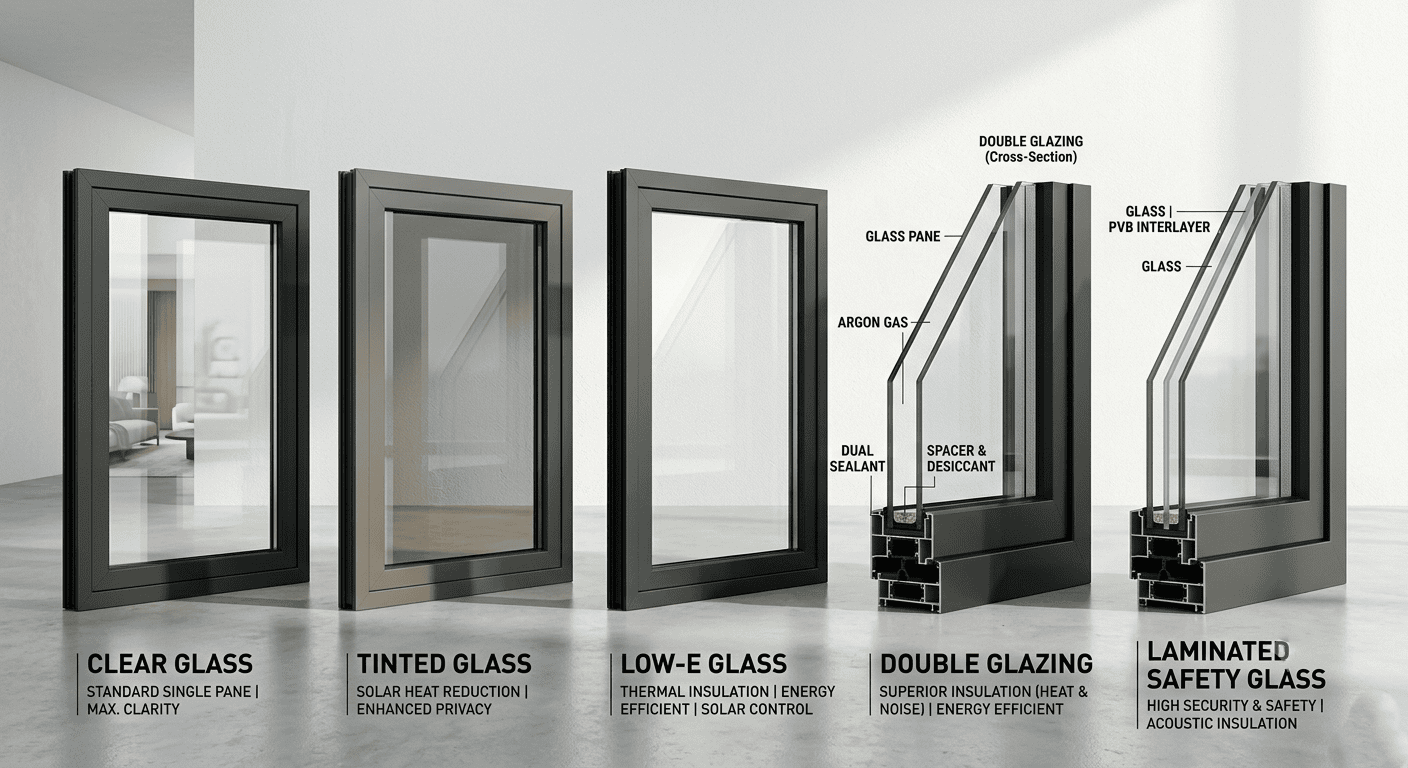
1. Clear Glass: A Simple Choice for Natural Light
Clear glass is widely used when the primary goal is to maximise daylight and maintain a neutral view.
It works well in spaces where:
- Direct solar heat is manageable
- A clear outdoor view is important
- Maximum natural light is preferred
- Additional solar or thermal control is not the main priority
However, clear glass by itself may not be the ideal choice for highly sun-exposed openings. Large areas of glazing can allow significant solar radiation into a building, making orientation and climate important considerations.
For this reason, clear glass should be selected based on the specific opening rather than treated as a universal solution.
2. Tinted and Solar-Control Glass for Strong Sunlight
Homes with large windows can receive substantial sunlight, particularly through east- and west-facing openings.
Tinted or solar-control glazing can help manage solar radiation and glare while changing the visual character of the glass.
This type of glazing can be considered for:
- Large living-room windows
- West-facing windows
- Balcony glazing
- High-exposure elevations
- Homes in hot climatic conditions
The exact performance varies by product, coating and specification. Therefore, homeowners should compare the relevant solar and daylight performance values instead of selecting glass purely by its colour.
For Indian homes where summer heat is a significant concern, solar-control glazing can be part of a broader energy-efficient window glass strategy.\
3. Low-E Glass for Better Thermal Performance
Low-E, or low-emissivity, glass uses a very thin coating designed to control heat transfer.
The U.S. Department of Energy notes that low-E coatings can reduce heat transfer and can be designed for different levels of solar gain and daylight transmission.
Why consider Low-E glass?
It can be useful when you want to:
- Reduce unwanted heat transfer
- Improve thermal comfort
- Manage solar heat
- Maintain good daylight
- Improve the overall thermal performance of the glazing system
Low-E glass for windows can be especially useful in larger glazed areas where thermal performance is an important consideration.
The important point is that not every Low-E coating behaves the same way. The appropriate coating depends on climate, orientation, window design, and the desired balance between daylight and solar control.
4. Double Glazing for Thermal and Acoustic Comfort
Double glazing consists of two panes of glass separated by a sealed insulating space.
The space between the panes may contain air or a suitable gas, depending on the glazing specification. The configuration helps reduce heat transfer compared with single glazing.
For homeowners researching double glazing windows in India, the benefits can include:
- Better thermal insulation
- Reduced heat transfer
- Improved indoor comfort
- Potential improvement in acoustic performance
- Greater design flexibility for performance-oriented windows
Double glazing can also be combined with Low-E coatings for enhanced thermal performance.
However, homeowners should not judge a double-glazed unit only by the number of panes. Glass thickness, cavity width, coating, frame design, seals, and installation also contribute to the performance of the complete assembly.
5. Laminated Glass for Safety and Acoustic Applications
Laminated glass is made with multiple glass layers bonded with an interlayer.
One important benefit is that the interlayer can help keep the glass together when it breaks, making laminated glazing useful for certain safety applications.
Indian Standard IS 2553 Part 1 covers safety glass for architectural, building and general uses, including requirements related to toughened and laminated safety glass. BIS currently lists IS 2553 Part 1:2018 as a mandatory-certification standard, with amendments including one recorded in 2026.
Laminated configurations can also be considered where acoustic performance is a priority. For homes near:
- Busy roads
- High-traffic streets
- Commercial areas
- Airports or transport corridors
- Dense urban neighbourhoods
A properly designed glazing build-up can help improve the indoor acoustic environment.
This is where selecting soundproof window glass should be approached as a complete acoustic-glazing strategy rather than simply choosing the thickest glass available.
6. Toughened Glass for Safety-Critical Areas
Toughened, or tempered, safety glass is heat-treated to improve its safety characteristics and resistance to mechanical and thermal stresses compared with ordinary annealed glass.
It is commonly considered for locations where safety is an important concern, such as:
- Large glazed openings
- Doors
- Low-level glazing
- Balcony areas
- Areas exposed to higher impact risk
BIS requirements for architectural safety glass cover aspects such as fragmentation, resistance to shock and resistance to human impact for relevant safety-glass products.
The correct glass should always be selected according to the opening, application and applicable project requirements.
How to Select Glass Based on the Direction of Your Window
Window orientation is one of the most overlooked factors in glazing selection.
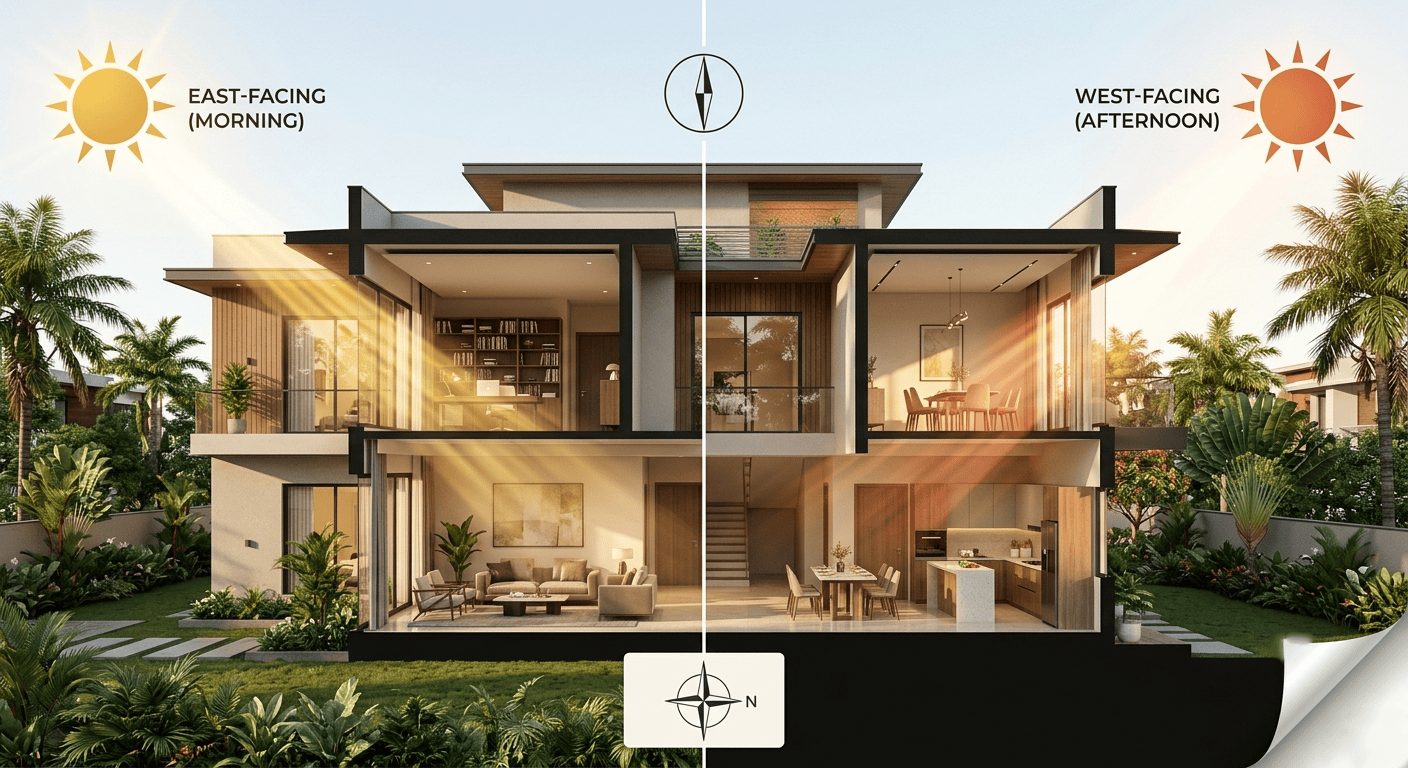
East-Facing Windows
Morning sunlight can create glare and heat gain. Consider glazing with appropriate solar-control characteristics when exposure is significant.
West-Facing Windows
West-facing openings can receive strong afternoon sunlight. Solar-control or Low-E glazing may be particularly worth evaluating for larger openings.
South-Facing Windows
The amount of solar exposure depends on location, building design, shading and season. Glass should be selected after considering these factors together.
North-Facing Windows
These openings may offer relatively softer daylight in many locations, but the actual performance still depends on climate, surrounding buildings and orientation.
There is no single glass type that is automatically ideal for every direction.
Consider the Size of the Window
The larger the glazed area, the more important your glass specification becomes.
A small kitchen window and a floor-to-ceiling living-room opening do not necessarily require the same glazing strategy.
For large openings, assess:
- Glass thickness
- Safety requirements
- Solar performance
- Thermal performance
- Acoustic needs
- Wind exposure
- Frame and hardware compatibility
- Installation method
Alcove’s aluminium systems are designed for applications involving large glazed areas, while its product range also includes uPVC systems and multiple operating configurations.
This highlights an important principle: glass should be selected as part of the complete window design.
Don’t Choose Glass Only by Thickness
A common mistake is assuming that thicker glass is automatically better glass.
Thickness is only one factor.
Two glazing combinations with different coatings, cavities, interlayers and pane thicknesses can deliver very different performance characteristics.
Instead of asking only:
“How thick should my glass be?”
ask:
“What performance does my room actually need?”
That leads to a more useful evaluation of thermal control, safety, sound reduction, daylight, solar gain and overall system compatibility.
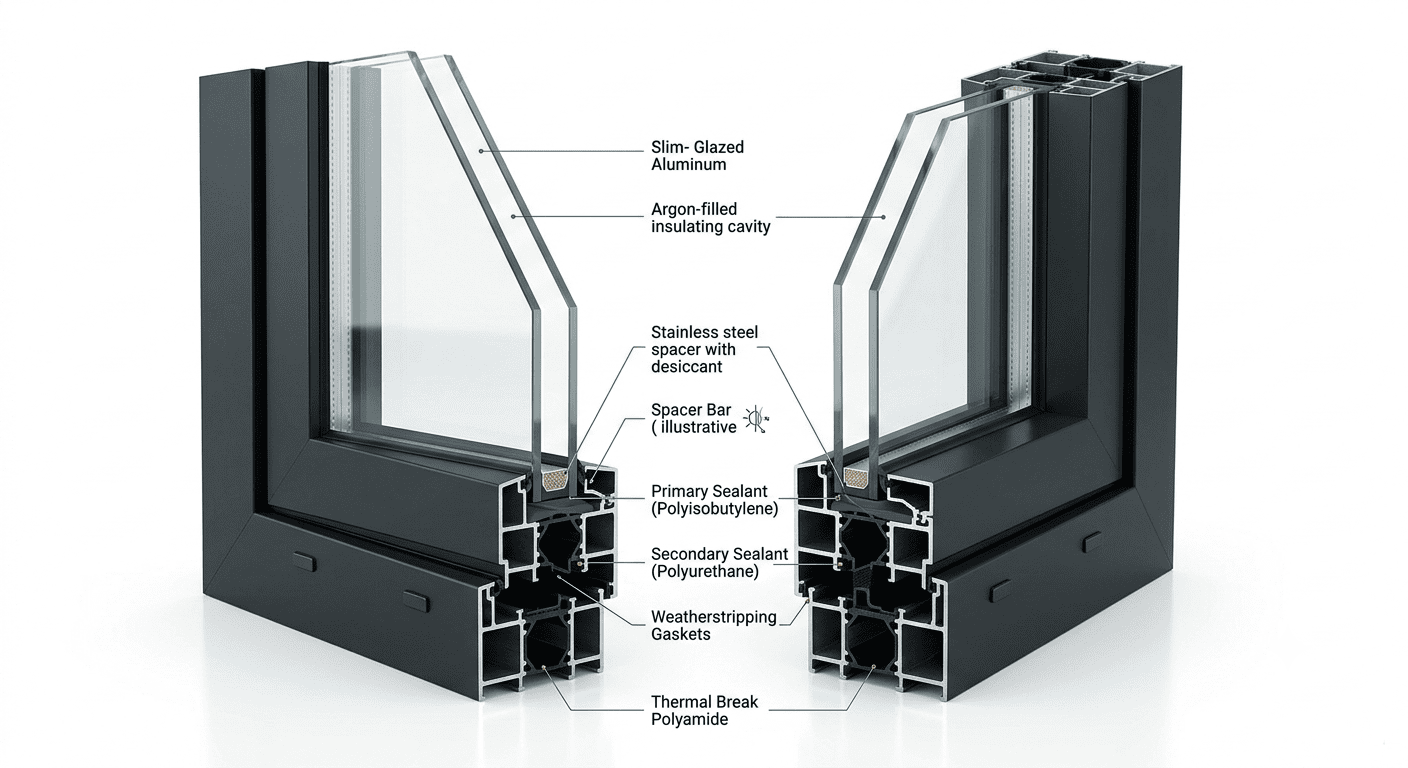
Glass Should Match the Window Frame
The frame and glass work together as one fenestration system.
A high-performance glass unit will not deliver its full potential if the window system, seals or installation are poorly specified.
Alcove Infra provides both aluminium and uPVC fenestration solutions, including sliding, casement, tilt & turn, lift & slide and other window and door configurations. Its website also highlights custom glass thickness, sizes, configurations and hardware options for its aluminium systems.
That makes a system-based approach important when selecting glazing.
For example:
Large modern opening:
Consider a suitable aluminium system combined with performance-oriented glazing.
Bedroom facing a busy road:
Prioritise an acoustic glazing strategy.
Sunny living room:
Consider solar-control or Low-E glazing.
Balcony or large door opening:
Evaluate appropriate safety glazing.
Low-maintenance modern home:
Consider the glazing together with a suitable uPVC or aluminium frame system.
Common Mistakes to Avoid When Choosing Window Glass
Choosing only by appearance
A beautiful tinted or reflective glass may not have the performance characteristics you need.
Ignoring window orientation
The same glass specification may not be equally suitable for every side of a building.
Focusing only on price
A lower initial cost may not provide the thermal, acoustic, or safety performance needed for the space.
Ignoring installation
The final performance depends on the complete assembly, including frame, seals, glazing and installation.
Using the same glass everywhere
Different rooms often have very different requirements.
Assuming one glass type solves every problem
Thermal insulation, solar control, noise reduction and safety are separate performance considerations. The solution may involve a combination of glass technologies rather than one feature.
A Simple Glass Selection Guide
| Home Requirement | Glass Type to Consider |
|---|---|
| Maximum natural light | Clear Glass |
| Strong sunlight and glare | Solar-Control / Tinted Glass |
| Better thermal performance | Low-E Glass |
| Improved insulation | Double Glazing |
| Safety-focused applications | Toughened / Laminated Safety Glass |
| Noise-sensitive rooms | Acoustic Glazing / Laminated Configurations |
| Large glazed openings | Performance Glazing + Suitable Frame System |
| Privacy | Tinted / Obscure / Suitable Privacy Glazing |
This table is a starting point rather than a universal specification. The final choice should consider orientation, opening size, climate, frame, safety requirements, and project conditions.
Why Choose Alcove Infra for Your Window Project?
Choosing the right glass becomes much easier when you work with a company that approaches windows as complete systems rather than individual components.
Alcove Infra provides made-to-order uPVC and aluminium fenestration systems for residential and commercial projects. Its website highlights weather resistance, energy efficiency, sound insulation, customised configurations and precision manufacturing, along with products ranging from sliding windows and casement systems to tilt & turn, lift & slide and folding solutions.
The company states that it has installed more than 1.2 million square feet of fenestration systems across multiple regions in India and Nepal.
For homeowners, architects, and builders, the goal should not simply be to buy glass. The better approach is to specify the right combination of:
Glass + Frame + Hardware + Sealing + Installation
That combination creates a window that is designed around the needs of the building.
Final Thoughts
Choosing the Right Window Glass for Your Home is ultimately about understanding what your space needs.
A clear glass window may be ideal for one room, while another may benefit from Low-E, solar-control, laminated or double-glazed construction. Safety requirements, sunlight, outdoor noise, window size, climate and architectural design should all influence the decision.
For modern Indian homes, there is no one-size-fits-all answer. The most effective approach is to evaluate the complete window system and select glazing that supports the comfort, safety, and performance goals of each room.
Choosing the Right Window Glass for Your Home becomes a much simpler decision when the selection is based on actual performance requirements rather than appearance alone.
At Alcove Infra, homeowners, architects, and builders can explore customised uPVC and aluminium window systems designed for modern residential and commercial applications.
Choosing the Right Window Glass for Your Home is not just a design decision—it is an important part of building a more comfortable and functional living space.
FAQs
Which glass is best for home windows?
There is no single best option for every home. Clear, Low-E, solar-control, double-glazed, laminated and toughened glass can each be suitable for different requirements.
Is Low-E glass worth using in Indian homes?
Low-E glass can be useful where reducing heat transfer and managing solar gain are important. The appropriate coating should be selected according to climate, orientation, and window design.
Is double glazing better than single glazing?
Double glazing can provide better thermal insulation because the panes are separated by an insulating space. The actual performance depends on the complete glazing configuration and window system.
Which glass is better for noise reduction?
Acoustic performance depends on the complete glazing build-up, not simply thickness. Laminated and specially configured double-glazed systems can be considered for noise-sensitive locations.
Should large windows use safety glass?
Large or vulnerable glazing areas may require safety glazing depending on the application and applicable standards. In India, IS 2553 Part 1 covers architectural safety glass.