
Choosing the right windows for your home is not just about looks it directly affects your energy bills, comfort level, safety, and long-term maintenance costs. In India, where we battle everything from scorching summer heat to heavy monsoon rains and coastal humidity, this decision matters more than ever.
Two materials dominate the modern Indian window market: Aluminium and uPVC Both are excellent replacements for traditional wooden windows, but they serve different needs. In this in-depth guide, we’ll break down every important factor, so by the end, you’ll know exactly which one is right for your home.
1. What Are Aluminium and uPVC Windows Made Of?
Before comparing them, it helps to understand the basic material difference.
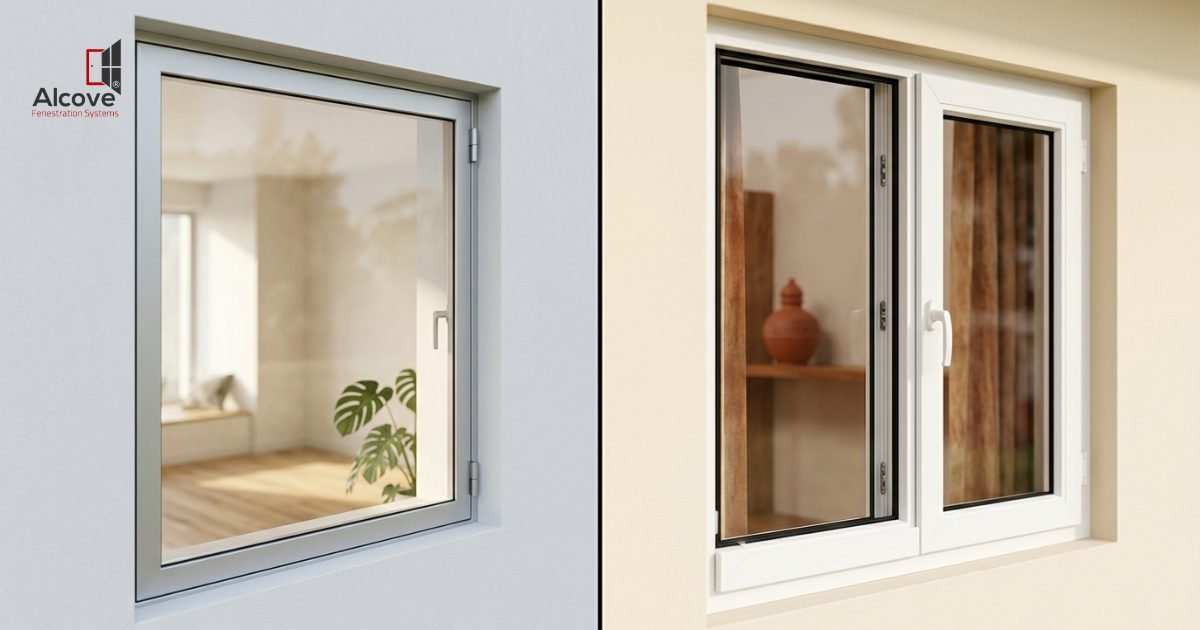
Aluminium Windows:- Metal-Based Frames
- Made from extruded aluminium alloy profiles
- Naturally lightweight yet structurally strong
- Powder-coated or anodised for colour and protection
- Recyclable metal — widely used in commercial builds
- Thin profiles allow larger glass panes
uPVC Windows:- Rigid Plastic Frames
- Made from rigid, chlorine-free PVC polymer
- Steel reinforced internally for added strength
- Multi-chambered hollow frame design
- Available in white and limited colour range
- Bulkier profiles compared to aluminium
Both materials have largely replaced timber windows in India’s urban and semi-urban construction sector. The reason is simple: neither rots, neither warps, and both require far less maintenance than wood.
2. Strength & Durability: Which Lasts Longer?
Both aluminium and uPVC windows are built to last, but their durability comes from different sources.
Aluminium is inherently stronger as a metal. It can support large glazing areas without requiring thick frames, making it the preferred choice for floor-to-ceiling windows and large commercial openings. High-grade aluminium frames typically last 40–50 years with minimal degradation.
uPVC frames are reinforced internally with galvanised steel for structural rigidity. They resist impact and are less prone to denting. A quality uPVC window lasts around 25–35 years in Indian conditions. However, prolonged intense UV exposure (think Rajasthan or Vidarbha summers) can cause gradual discolouration and brittleness over decades.
3. Heat & Thermal Insulation: Staying Cool in Indian Summers
This is one of the most critical factors in a country where summer temperatures regularly touch 42–48°C.
Standard Aluminium is a highly conductive metal — it transfers heat easily. This means aluminium windows can allow significant heat to pass through from outside into your rooms. However, modern thermal break aluminium windows address this by inserting a non-conductive polyamide barrier between the inner and outer frame profiles, dramatically reducing heat transfer.
uPVC is naturally a poor conductor of heat. Its multi-chambered hollow profiles act as insulating air pockets, significantly reducing heat gain. uPVC windows can reduce indoor temperatures by 3–5°C compared to aluminium windows without thermal breaks — which translates directly into lower air conditioning bills.
Aluminium:- Thermal Performance
- Poor without thermal break technology
- Good with thermal break profiles (higher cost)
- More suitable for mild climates
- Heat conduction can warm up frame surfaces
uPVC:- Thermal Performance
- Excellent natural thermal insulator
- Multi-chamber design traps insulating air
- Can reduce AC load significantly
- Ideal for hot cities like Delhi, Nagpur and Jaipur
4. Sound Insulation: Peace & Quiet in Noisy Cities
If you live near a busy road, railway line, or in a congested city neighbourhood, sound insulation becomes a top priority.
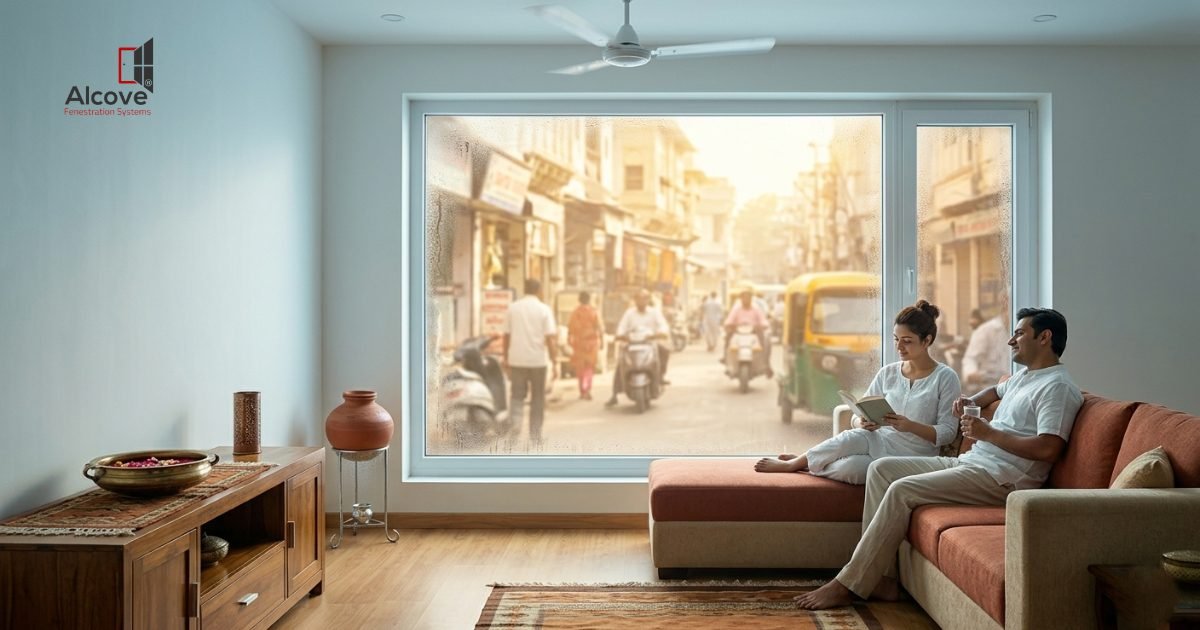
uPVC windows significantly outperform standard aluminium in sound insulation. The dense, multi-chambered plastic frames combined with tight rubber gasket seals create an excellent acoustic barrier. Paired with double-glazed glass, uPVC windows can reduce noise by 30–45 dB — enough to turn a chaotic street into a quiet room.
Aluminium windows can achieve decent sound insulation when fitted with double glazing and proper seals, but the thinner, more rigid frame conducts sound vibrations slightly better than uPVC, making them less effective in high-noise environments.
5. Weather & Corrosion Resistance: Built for India’s Diverse Climate
India’s climate is extraordinarily diverse — from the humid coasts of Kerala and Goa, to the dry desert air of Rajasthan, to the cold Himalayan winters in Himachal Pradesh and Uttarakhand. Window materials must survive them all.
Aluminium naturally forms a thin oxide layer that protects it from corrosion. Powder-coated or anodised aluminium is highly resistant to rain, moisture, and dust. However, in coastal areas with salt-laden air (Mumbai, Chennai, Kochi, Visakhapatnam), aluminium can corrode over time unless specifically treated with marine-grade coatings.
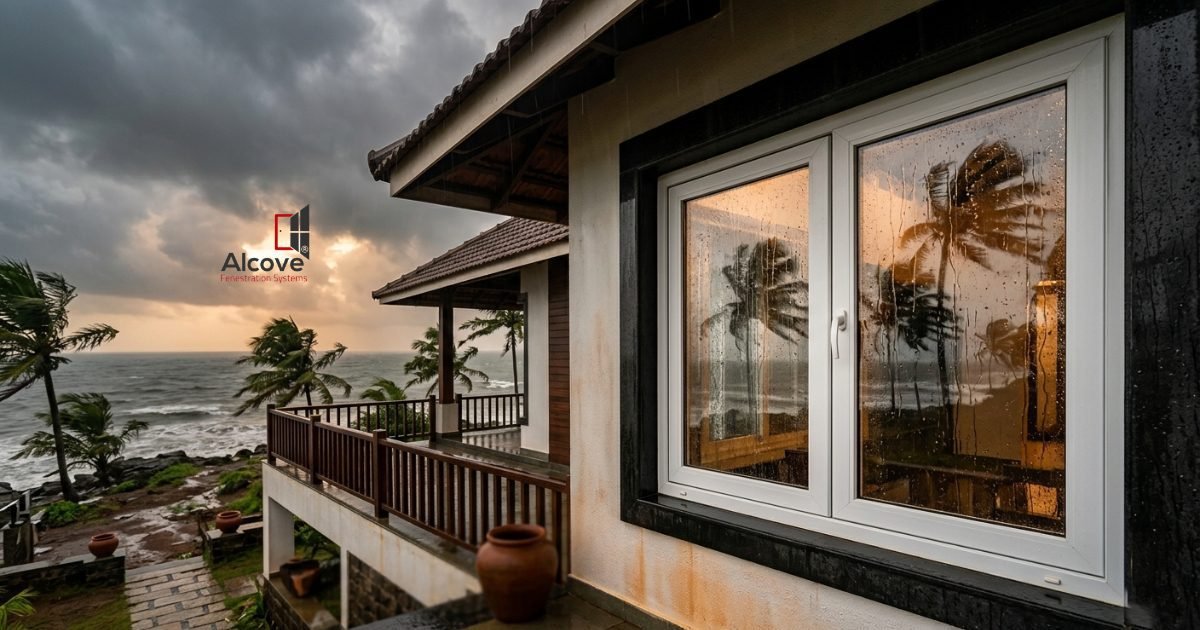
uPVC is completely impervious to moisture — it won’t rust, corrode, or rot under any circumstances. It handles coastal humidity, heavy monsoon rains, and salty sea air equally well. This makes it the superior choice for homes along India’s 7,500+ km coastline.
6. Maintenance & Upkeep: How Much Work Do They Need?
One of the biggest reasons Indian homeowners move away from wooden windows is the high maintenance — annual painting, polishing, and battling termites. Both aluminium and uPVC solve this problem, but in slightly different ways.
Aluminium — Maintenance
Low, But Not Zero
- Periodic cleaning with mild soap and water
- Powder coat may chip or fade after 10–15 years
- Re-painting/re-coating possible (flexibility)
- Hardware (hinges, locks) may need lubrication
- Check for corrosion in coastal areas every 2 years
uPVC — Maintenance
Virtually Zero Effort
- Wipe clean with a damp cloth — done
- Colour is integral — no painting ever needed
- No rust, rot, or termite risk whatsoever
- Rubber seals may need replacement after 15–20 years
- Cannot be re-painted if colour fades (limitation)
7. Cost Comparison: What Will You Actually Pay in India?
Pricing varies by city, brand, glass type, and window size — but here’s a realistic overview of what you can expect in the Indian market (2025 prices):
| Factor | Aluminium Windows | uPVC Windows |
|---|---|---|
| Basic Cost per sq. ft. | ₹250 – ₹450 | ₹350 – ₹600 Better insulation value |
| Premium / Designer Range | ₹600 – ₹1,500+ | ₹700 – ₹1,200+ |
| Installation Cost | Moderate | Slightly higher (heavier frames) |
| Long-term Maintenance | ₹2,000–5,000 per year | Almost nil Big savings |
| Energy Bill Savings | Moderate (without thermal break) | High — reduced AC load ROI in 3–5 years |
| Repair & Refurbishment | Can be re-coated / repaired | Limited — full replacement if damaged |
| Lifespan | 40–50 years | 25–35 years |
While uPVC has a higher upfront cost per square foot, it saves significantly on electricity bills (lower AC usage) and eliminates maintenance costs. Over a 10-year horizon, uPVC often proves more economical for most Indian homeowners.
8. Aesthetics & Design Options: Which Looks Better?
Let’s be honest — after function and budget, looks matter a lot.
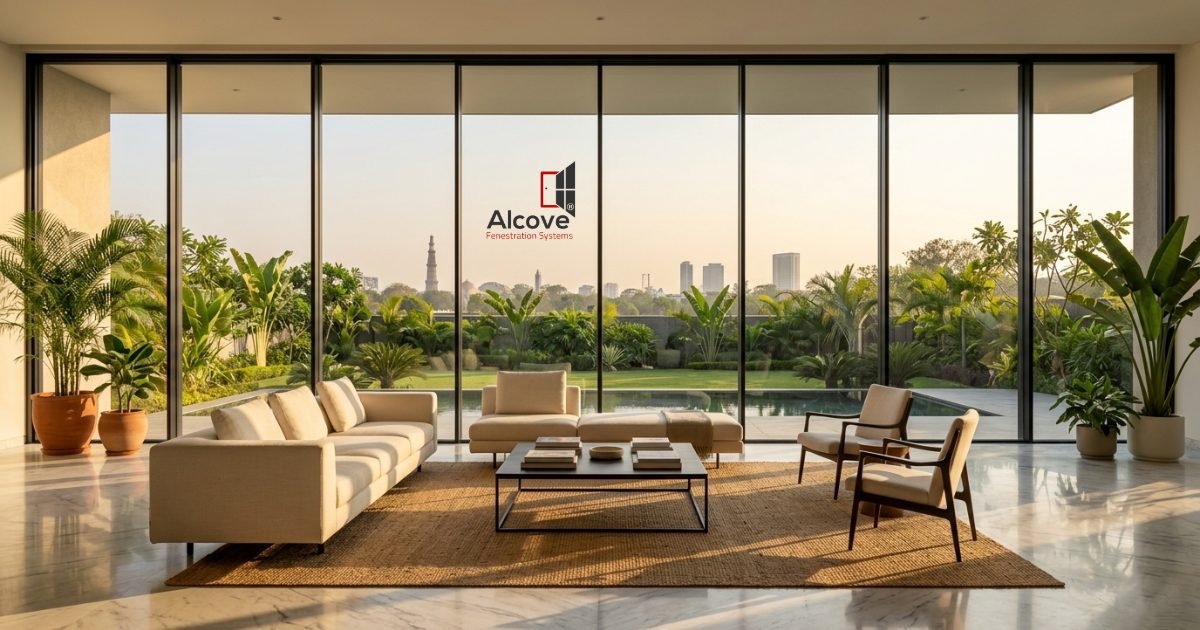
Aluminium wins hands-down on aesthetics and design flexibility. Its slim, sleek profiles give a contemporary, architectural look that suits modern homes, high-rise apartments, and premium villas. It is available in virtually any RAL colour through powder coating — champagne, anthracite grey, bronze, matte black, and hundreds more. Aluminium is also the only choice for very large windows and sliding doors with minimal frame visibility.
uPVC is primarily available in white, cream, and a limited range of wood-effect foils. It has bulkier profiles that some homeowners find less attractive. However, for traditional, colonial-style, or modest homes, the clean white look is perfectly fitting and timeless.
9. Eco-Friendliness: Which Is Greener?
Aluminium — Eco Report
Highly Recyclable Metal
- 100% recyclable at end of life
- High energy consumption in initial production
- Recycled aluminium uses 95% less energy
- Long 50-year lifespan reduces replacement waste
- Growing use of recycled aluminium in India
uPVC — Eco Report
Energy Saving in Use
- Reduces energy use via better insulation
- PVC recycling infrastructure limited in India
- Chlorine content raises end-of-life concerns
- Shorter lifespan means more replacements
- Lead-free uPVC variants now available
On balance, aluminium has the edge environmentally — especially as India’s aluminium recycling infrastructure grows. uPVC saves energy during use but poses disposal challenges at end of life.
10. Quick Comparison: Aluminium vs uPVC at a Glance
| Feature | 🔶 Aluminium | 🔷 uPVC |
|---|---|---|
| Strength | Excellent ✅ | Good (steel reinforced) |
| Thermal Insulation | Poor (basic) / Good (thermal break) | Excellent ✅ |
| Sound Insulation | Good | Excellent ✅ |
| Coastal/Humidity Resistance | Good (treated) | Excellent ✅ |
| Corrosion Resistance | Good | Perfect ✅ |
| Maintenance | Low | Virtually None ✅ |
| Lifespan | 40–50 years ✅ | 25–35 years |
| Design Flexibility | Excellent ✅ | Limited |
| Upfront Cost | Lower ✅ | Moderate to High |
| Long-term Cost | Moderate | Lower ✅ |
| Eco-Friendliness | Better (recyclable) ✅ | Moderate |
| Best For | Large windows, modern homes, commercial | Thermal comfort, coastal homes, noise zones |
Which Window Should You Choose?
There is no single “best” answer; the right choice depends on your specific location, home type, budget, and priorities. Here’s how to decide:
Choose Aluminium If…
- You want a sleek, modern look
- Your home has large window spans
- You live in a dry or mild climate
- You’re furnishing a premium villa or apartment
- You want design colour flexibility
- It’s a commercial or high-rise project
Choose uPVC If…
- You live in a hot, humid, or coastal city
- Reducing AC electricity bills is a priority
- You live near a busy road or railway
- You want zero-maintenance windows
- Budget is mid-range with long-term savings
- You’re in a monsoon-heavy region
For most Indian middle-class homes in cities like Mumbai, Pune, Hyderabad, Bangalore, Kochi, and Chennai, uPVC is the practical winner. It delivers superior comfort, energy savings, and zero maintenance. For premium builders, architects, and large modern homes, aluminium’s aesthetics and strength make it the natural choice.